

X-Ray Microtomography

2024 Scholars Week Scientific Image Competition Best Micro-CT Image Winner: "Varied Thrush Skull" by Carly Hopp
About
Micro-CT (computed tomography) is a non-destructive imaging technique that provides high-resolution, three-dimensional images of small objects or samples. It operates on the same principles as medical CT scanners but is designed for much smaller specimens, typically on the scale of millimeters to a few centimeters. The micro-CT rotates a sample while capturing X-ray projections from various angles, which are then reconstructed into a detailed 3D image using advanced computer algorithms. Micro-CT is used in various fields such as materials science, biology, archaeology, and geology, enabling researchers to visualize internal structures, porosity, and other fine details without the need for sample sectioning. Its versatility and precision make it a valuable tool for non-invasive investigation and analysis at the microscale.
Located CF 022
Primary Contact
Mike Kraft
he/him
Michael.Kraft@wwu.edu
(360) 650-3879
ES 508a
How to Get Started
Check out our New Users page!
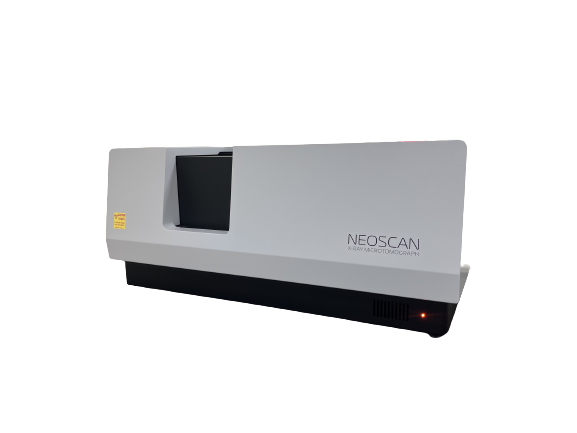
NeoScan N80 X-Ray Micro-Computed Tomography Scanner
Sample Preparation
More resources coming soon!
Educational Content
More resources coming soon!
Published Data
Coming Soon!
If you have any published data acquired through SciTech's instrumentation, please email the instrument's primary contact!
Submission Form
If you have utilized any SciTech resources for research that has been published or presented at conferences please fill out this form.